

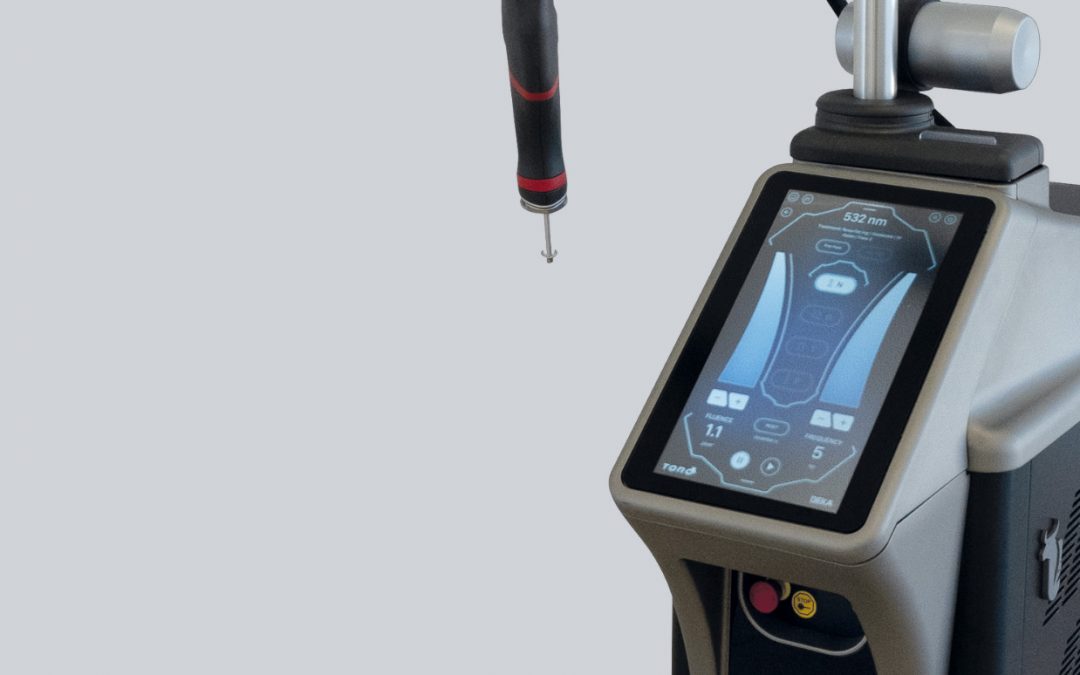
Dark spots, patches and uneven skin tone are some of the most common reasons people look for skin treatment. Our pico laser in Ipswich is designed first and foremost to treat pigmentation, and it is suitable for every skin type, from very fair to deep.
The same laser can also improve acne scarring and remove tattoos. However, pigmentation is its main purpose, so that is what this guide focuses on.
What is a pico laser?
“Pico” is short for picosecond, which is one trillionth of a second. A pico laser delivers its energy in extremely short pulses, far shorter than older lasers.
Because each pulse is so brief, the energy breaks pigment into very fine particles with a shock-wave effect, rather than relying mainly on heat. Your body then clears those particles away naturally over the following weeks. Less heat spreads into the surrounding skin, which helps keep downtime short.
Our pico laser has three wavelengths, 532nm, 785nm and 1064nm, and can also use slightly longer nanosecond pulses. As a result, we can match the treatment closely to your skin type and to the depth and colour of your pigment.
Pico laser for pigmentation: what it treats
Pigmentation is the main reason we use the pico laser. It can help with:
- Sun spots and age spots on the face, hands, chest and shoulders
- Freckles and general sun-related pigmentation
- Melasma, using careful, gentle settings as part of a wider plan
- Dark marks left after spots (post-inflammatory hyperpigmentation)
- Uneven skin tone and dullness, through brightening treatments
- Congested, oily-looking skin, through the pico carbon peel
Other uses of the pico laser
As well as pigmentation, the pico laser is also used for:
- Acne scars, texture and fine lines. Read our guide to pico laser for acne scars and skin rejuvenation.
- Tattoo and semi-permanent make-up removal. Read our guide to pico laser tattoo removal.
Not sure which applies to you? Book a consultation and we will advise you.
Is pico laser safe for darker skin?
Pigmentation treatment on darker skin needs particular care. Too much heat can trigger post-inflammatory hyperpigmentation, which is darkening of the skin after treatment.
The 785nm wavelength is designed for skin types III to VI. Together with the very short pulses, this helps lower that risk. For this reason, our pico laser is suitable for skin types I to VI. We still start gently and carry out a patch test first.
Melasma: a gentle, gradual approach
Melasma appears as brown or grey-brown patches, often on the cheeks, forehead and upper lip. It is linked to hormones, sunlight and genetics, so it can be stubborn and can come back. Aggressive treatment can make it worse.
For these reasons, pico laser is usually one part of a melasma plan, alongside daily sun protection and suitable skincare. For some people, a depigmentation programme such as Cosmelan is a better place to start. You can compare options in our guide to chemical peels in Ipswich.
The pico carbon peel
The carbon peel is a gentle brightening treatment. First, we apply a thin layer of carbon lotion and let it dry. Next, we pass the laser over the skin, and the carbon lifts away with surface oil and debris.
Many people notice brighter, smoother-looking skin and less obvious pores straight afterwards.
Your pico laser appointment
Consultation. We look closely at your skin and ask about your medical history, medicines and sun habits. Then we agree a personalised plan. Any mark that has changed, bled or looks unusual is checked by a doctor first. We never treat a mark with laser until we are confident it is harmless.
Patch test. We carry out a patch test on a small area before your first full session.
Treatment. You wear protective eyewear throughout. Most people feel mild warmth or a light flicking sensation, and most treatments do not need numbing cream. Sessions take 20 to 45 minutes.
Downtime and aftercare
Downtime is usually minimal. Your skin may look slightly red or feel warm, which typically fades within a few hours. Treated sun spots often darken for a few days before they flake away. This is a normal part of the process.
Less commonly, treated skin can become temporarily darker or lighter than the surrounding area, and melasma can sometimes flare. Blistering or scarring is rare. We discuss these risks at your consultation and adjust settings to your skin.
For 24 to 48 hours afterwards:
- Avoid direct sun
- Avoid active skincare such as exfoliating acids and vitamin A products
- Keep your skin clean and moisturised
Daily sun protection matters most of all, because new sun exposure can bring pigmentation back. The NHS has helpful sunscreen and sun safety advice. We recommend a broad-spectrum SPF50 every day, all year round.
How many sessions will I need?
This depends on what we are treating:
- Individual sun spots and dark marks may improve after one session, although some need more.
- Uneven tone and brightening usually respond best to a course of sessions.
- Melasma typically needs a gradual course and ongoing maintenance, and results vary more.
Your skin keeps responding for several weeks after each session. Therefore, we review your progress and adjust your plan as you go.
Is pico laser right for me?
We would usually advise waiting if you:
- Are pregnant or breastfeeding, as hormones can affect pigmentation
- Have an infection, cold sore or broken skin in the area
- Have a recent tan or fake tan
- Take medicines that make your skin more sensitive to light, or have taken prescription acne tablets in the last six months
- Tend to form keloid scars
- Have a pigmented mark that a doctor has not yet checked
For an injectable approach to more even tone, you can also read about polynucleotides in Ipswich.
Pico laser prices in Ipswich
Every pigmentation plan is different, so pico laser prices are tailored to you. Please ask us for a quote at your consultation. You can see our other treatments on our pricing page, and more about the laser on our pico laser page.
Frequently asked questions
What is the difference between pico laser and other lasers?
Pico lasers use much shorter pulses than older nanosecond lasers. This breaks pigment into finer particles with less heat, which can mean less downtime and, for some concerns, fewer sessions.
Can pico laser treat pigmentation on darker skin?
Yes. The 785nm wavelength is designed for skin types III to VI and helps lower the risk of post-inflammatory hyperpigmentation.
Will my melasma go away for good?
Melasma can often be improved and managed, but it can return. Sun exposure and hormonal changes are common triggers, so ongoing sun protection and maintenance are important.
Does it hurt?
Most people feel mild warmth or a light flicking sensation. Most treatments do not need numbing cream.
Book your consultation
If pigmentation or uneven tone is getting you down, we would be happy to help. Book your consultation online for pico laser treatment at our clinic at 5 The Walk, Ipswich. Alternatively, call 01473 948 271 or WhatsApp us on 07938 168 157.
Recommended aftercare from our shop
- Sensilis Photocorrection D-Pigment 50+ Colour: a tinted SPF50+ designed for pigmentation-prone skin, for daily protection.
- Obagi Sun Shield SPF50 Tint Warm: our everyday broad-spectrum SPF50, which helps protect your results.
- Medik8 C-Tetra Advanced: a vitamin C serum to support brighter-looking skin once your practitioner says you can restart actives.
Skincare advice in your inbox
Treatment guides, expert skincare tips and clinic news. No spam, unsubscribe any time.
By subscribing you agree to receive emails from Dr Skin Central.