

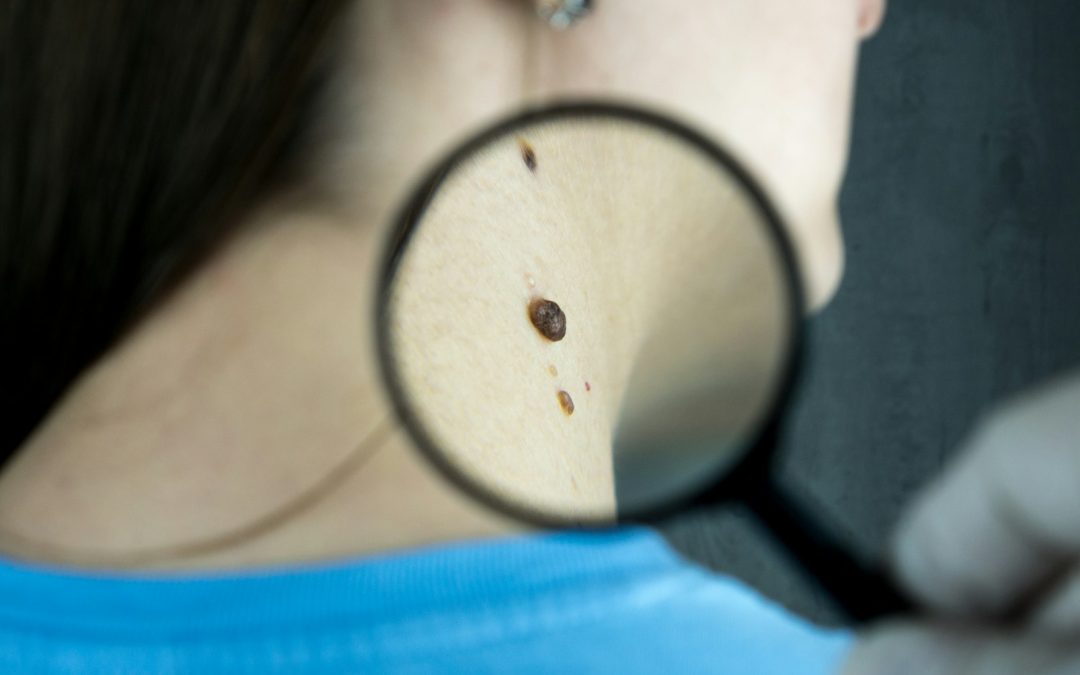
Skin tags, warts, verrucas and moles are very common. Most are harmless, but they can catch on clothing, feel uncomfortable or simply bother you. Removing benign lesions for cosmetic reasons is generally no longer offered on the NHS. For mole removal in Ipswich, our doctor-led clinic uses cryotherapy (freezing), always after a careful medical check.
Mole removal starts with a doctor’s check
This matters more than anything else in this article. Before any mole is treated, a doctor examines it. Most moles are harmless. However, a mole or other mark can occasionally be a sign of skin cancer, and it is vital this is not missed.
- We remove moles by freezing (cryotherapy) only. Freezing destroys the tissue, so it cannot be examined afterwards. This is why a doctor examines every mole first and only treats moles that are clearly benign.
- We never treat anything suspicious. If a mole or mark has any worrying features, we do not freeze it. Instead, we refer you for specialist assessment.
Please get a mole checked promptly if it is new, changing, itching, bleeding or looks different from your other moles. The NHS explains the warning signs to look out for in moles.
What can we treat?
Our Ipswich cryotherapy service can help with:
- Skin tags
- Warts and verrucas
- Benign moles, after a doctor’s assessment
- Small lumps, bumps and blemishes that have been assessed as benign
We also offer minor skin surgery for cysts and some other lumps. Please ask us at your consultation.
Have a mole or lump you would like checked? Book a consultation with our doctor.
For flat brown marks such as sunspots, laser may suit you better. Read our guide to pico laser for pigmentation.
What is cryotherapy?
Cryotherapy, also called cryosurgery, uses extreme cold to freeze and remove abnormal tissue. A very cold substance is applied precisely to the lesion with a fine spray or applicator. The freezing damages the cells in the lesion. After that, it typically blisters or scabs and falls away over the following weeks.
It is quick and needs no stitches or cutting. So it is a good option for benign moles, skin tags, warts, verrucas and other small benign lesions.
Your mole removal appointment in Ipswich
Consultation first
We ask about your medical history and medicines, and examine the lesion carefully. The doctor then confirms whether freezing is suitable. If anything needs further assessment, they will explain this and arrange a referral.
The treatment itself
During cryotherapy, you will feel intense cold and a stinging or burning sensation for a short time. A throbbing feeling may follow. Treating one lesion usually takes only a few minutes.
Downtime and aftercare
After cryotherapy, the area usually becomes red and may swell or blister within a day. A scab then forms and normally falls away within one to three weeks.
To help healing:
- Keep the area clean and dry, and wash gently.
- Do not pick at scabs or burst blisters.
- Cover the area if it is likely to rub on clothing.
- Protect healed skin from the sun, because treated skin can be lighter or darker for a while. Obagi Sun Shield SPF50 is our everyday choice.
Once healed, any lingering marks can sometimes be improved with chemical peels, and we can advise. Contact us if you notice increasing pain, spreading redness, warmth or discharge, as these can be signs of infection.
How many sessions will I need?
Many skin tags respond to a single cryotherapy treatment. Warts and verrucas, however, can be more stubborn. They often need more than one session, a few weeks apart. Moles may also need a second treatment. Results vary, and lesions can occasionally return.
Is cryotherapy right for me?
Cryotherapy suits many people. However, your doctor may suggest another approach, or waiting, if:
- the lesion has any features that need further assessment
- you have poor circulation, diabetes or a condition affecting healing
- you are sensitive to cold
- you take blood-thinning medicines or have a bleeding disorder, so please tell us
- you tend to form raised or keloid scars
- you are pregnant, as non-urgent removal may be best delayed
- the lesion is in a delicate area, such as close to the eye
- you have darker skin, where freezing can cause lasting lighter patches
If you would like a wider review of your health, our private GP health check can include a skin check. You can also see all our GP services.
Mole removal price in Ipswich
Cryotherapy at our Ipswich clinic starts from £60 for a single lesion, or £100 for two lesions. See our pricing page for the latest. A £30 consultation comes first, so a doctor can assess the lesion. For cysts and other lumps, we give you a quote once we have seen what needs removing. Our skin treatments page has more detail.
Frequently asked questions
Will it leave a scar?
Cryotherapy often heals with little visible mark, but it can leave a small lighter or darker patch, especially on darker skin.
Can you freeze a mole?
Yes. At our clinic, moles are removed by freezing. Because frozen tissue cannot be examined afterwards, a doctor checks every mole first and only freezes moles that are clearly benign. Anything suspicious is referred for specialist assessment instead.
Will a wart or skin tag come back?
Usually not once fully removed. However, warts can recur and new skin tags can form elsewhere.
Do you treat children?
Our mole, skin tag and wart removal is for adults.
Book your consultation
To have a lesion checked and discuss mole removal in Ipswich, book your consultation online. Alternatively, call us on 01473 948 271 or WhatsApp 07938 168 157. We are at Dr Skin Central, 5 The Walk, Ipswich IP1 1EA.
Support your skin at home
Once your skin has healed, a good daily routine helps keep it healthy. Take our skin quiz for personalised recommendations, or browse our skincare shop.
Skincare advice in your inbox
Treatment guides, expert skincare tips and clinic news. No spam, unsubscribe any time.
By subscribing you agree to receive emails from Dr Skin Central.